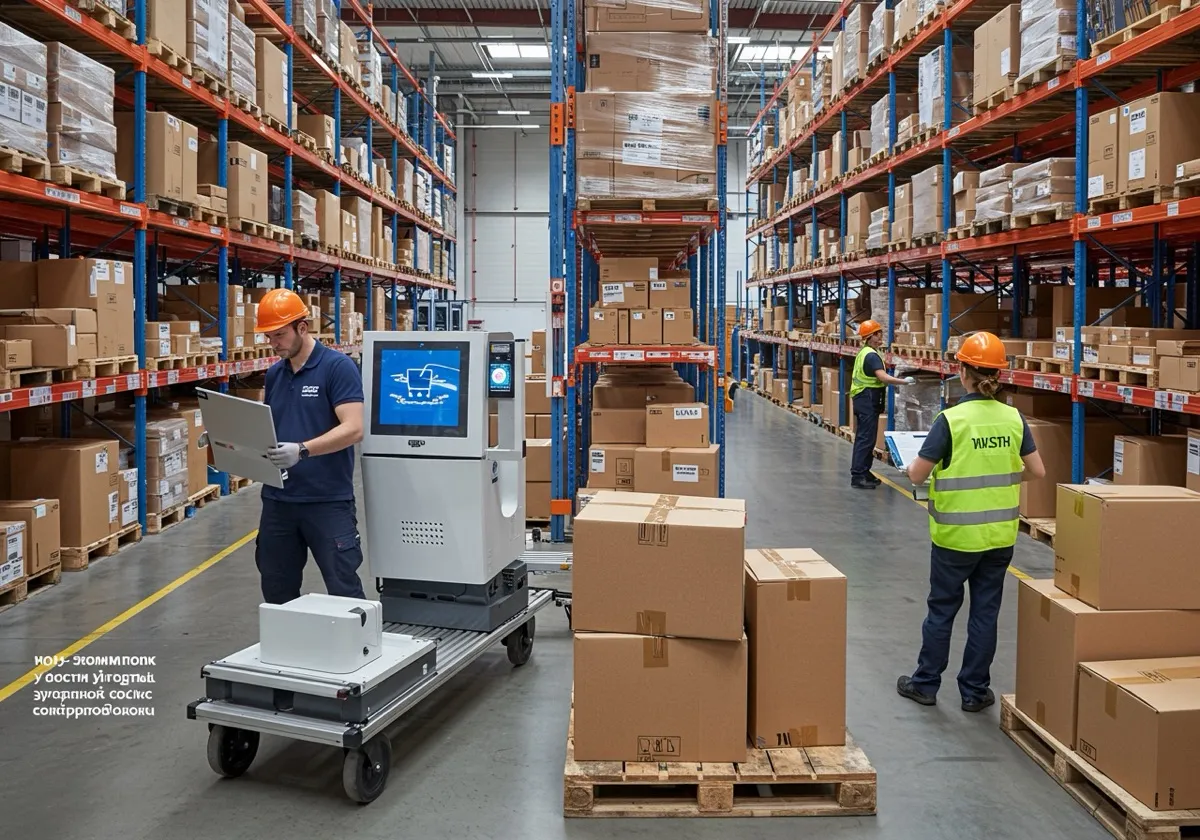
Audit before it breaks, not after
Most stores check their warehouse only when something is already on fire. Orders ship late, customers are in your inbox, the stock numbers stopped matching reality. By then it is too late to fix anything calmly. The right time to audit your fulfillment is when things are quiet — a couple of months before your peak, not during it.
We have shipped 2.6 million parcels and kept zero days of downtime since 2022. That experience taught us one thing above all: the stores that check their logistics in advance walk into Black Friday without panic. The ones that wait for things to "sort themselves out" lose orders in the exact month when every order counts most.
Below is the checklist we use to pull apart our own operation across two sites — Shchaslyve (Boryspil district, 2,700 m²) and Bilohorodka (Kyiv region, 1,000 m²), 3,700 m² in total. It works whether you run your own warehouse or rely on a 3PL partner.
When to run the audit
The best window is your low season. For most categories that means summer and early autumn, when order volume dips. Not because summer is magic. Because in a quiet month you have two things you will not have in November: time, and room to make a mistake.
Counting inventory while the warehouse runs flat out is misery. Any experiment during peak costs you missed shipments. In a slow month you can stop a process, measure it, break it, and rebuild it — and enter the season with a tested system instead of a hope.
The rule is simple: audit two to three months before your expected peak. That is enough time to find a problem, fix it, and confirm the fix actually holds.
The fulfillment audit checklist
1. Inventory reconciliation
The most boring task, and the most important. A full physical count against your warehouse management system. Discrepancies always creep in: miscounts at receiving, a pick pulled from the wrong bin, a return shelved without scanning, damage written off "later."
We scan at every step through our WMS, and we still reconcile. Without scanning, the numbers in the system and the goods on the shelf drift apart within weeks. Count in batches by your top SKUs. Log shortages, overstock, and mis-sorts per position. Each gap points to a broken process, not bad luck.
2. Storage layout
Layouts rot over time. A fast mover ends up in the far corner because it was a slow mover when it first arrived. Last season's stock sits in the golden bins by the packing table. Dead inventory eats space.
Pull the last six months of order data and re-sort your shelves by pick frequency, not by revenue. Whatever gets picked most often belongs closest to packing, at waist-to-shoulder height. This is the cheapest speed gain there is: you buy nothing, you just move shelves.
3. Pick and pack speed
Time every stage: order in → pick list → assembled → packed and labeled → handed to the carrier. Hunt for the bottleneck. Extra steps the packer walks. A label printer that jams. Packing materials kept out of arm's reach.
On our floors, picking runs through the WMS with a scan at every step, so an order is assembled within minutes and any error shows up immediately. We hold capacity up to 6,000 orders a day — and that number is not a "someday" figure, it is the everyday ceiling, held by disciplined process rather than heroics during peak.
4. Power and connectivity backup
In Ukraine this is not optional. Power and internet drop without warning. The test is not "did it start" — it is one hour under load, simulating a full grid failure.
We run three generators, two independent fibre ISPs, and Starlink on top. If you run your own warehouse, confirm every critical node is on the backup line: WMS, internet, lighting, scanner charging. A generator that powers the lights but not the server is not a backup.
5. Carriers by route
Pull six months of shipping data. What share of parcels arrived on time? Where were the delays concentrated? What was your damage and loss rate?
You will often find your main carrier underperforms in a specific region where another one does better. We work with Nova Poshta, Ukrposhta, Meest, Justin, Avtoluks, and KastaPost, which lets us pick the carrier by destination instead of shipping everything one way out of habit.
6. The money: rate and true cost
Calculate the all-in cost of one shipment: receiving, storage, picking, packing, materials, carrier fee, return handling. Compare against last year. If it went up, find out which component is pulling it.
For reference, here are our tariffs: shipping from 30 UAH (at 200+ orders a day) up to 42 UAH (at 0–5 a day), storage at 975 UAH per m³ per month, a 10,000 UAH monthly minimum. Return unpacking is 50% of the pick-and-co-packing fee. Knowing these numbers for your own operation matters more than comparing a headline rate: cheap shipping with expensive storage and slow returns can cost you more in the end.
If the storage side has become the pain point, look at what an outside operator actually takes off your plate in our full-cycle fulfillment breakdown — sometimes moving to a partner is cheaper than patching your own warehouse.
7. Returns and payment control
Peak sales mean peak returns, fashion especially. A return that sits unchecked for a week costs you twice: the item is not selling and the slot is blocked. You need a tight loop: receive → inspect → back on the shelf.
Separately, watch the money coming back from carriers. We run "Sheriff of Payments" — a Telegram alert on every carrier payment received. Sounds minor until you lose a cash-on-delivery payment and spend a week chasing it. Ask your partner how they reconcile incoming carrier payments. A vague answer is a red flag.
8. Integrations
Check that orders flow into the warehouse without a manual export. Stock has to update in real time, or you will sell what you do not have. We connect to KeyCRM, SalesDrive, LP-CRM, Sitniks, Horoshop, OpenCart, and WooCommerce, plus the Rozetka, Prom, and Kasta marketplaces. A once-a-day manual upload is a time bomb waiting for Black Friday.
When the audit says: change the setup
Sometimes the conclusion is uncomfortable: process tweaks will not fix this. You have outgrown your warehouse. Your partner's tech is dated, the error rate is too high, the rate stopped being competitive. If that is the verdict, change the setup in the off-season, not in November.
Moving inventory between warehouses during peak is operational suicide. Even a short disruption during Black Friday week costs thousands of orders. In a quiet month it is a different story: few active shipments to coordinate, the new operator has time to learn your product mix and integrations, and you have months to find and clear the rough edges before the season.
If you are weighing that move, read up first on how outsourced 3PL logistics actually works so you compare on substance, not on the word "cheap."
The bottom line
Do not wait for the break. The stores that win the season pull their logistics apart in the quiet — when there is time to think, not fight a fire. The eight points above are what we check ourselves. Walk through them before the order wave hits.
Want an outside read on your setup? Get in touch. We will show you how your processes look next to a warehouse that has shipped 2.6 million parcels without a single day of downtime.