The Ultimate Fulfillment Guide
for E-commerce
Everything you need to know about outsourcing logistics in Ukraine. From choosing an operator to scaling to 6,000 shipments per day — while spending only 8 hours a month on logistics.
Chapter 1: What Is Fulfillment and Why Does It Matter?
Fulfillment is the complete cycle of processing an online order: from the moment a customer clicks "Buy" to the moment the parcel arrives at their door. It encompasses receiving inventory at a warehouse, storing it in an organized system, picking the correct items when an order comes in, packing them securely, labeling the parcel with carrier barcodes, and handing it off to a delivery service like Nova Poshta, Ukrposhta, or Meest.
For small stores doing 5-10 shipments a day, handling fulfillment in-house makes sense. But the moment your business crosses roughly 30-50 orders per day, logistics becomes a full-time job.
This is precisely where third-party logistics (3PL) fulfillment enters the picture. A 3PL operator takes over the entire physical supply chain so you can redirect your energy toward what actually grows revenue — marketing, product development, and customer experience.
"I started MTP Group in 2014 because I saw how many talented entrepreneurs were drowning in logistics instead of scaling their brands. Ten years and 150+ clients later, I am more convinced than ever that outsourcing fulfillment is the single highest-leverage decision an e-commerce founder can make." — Mykola Liashchuk
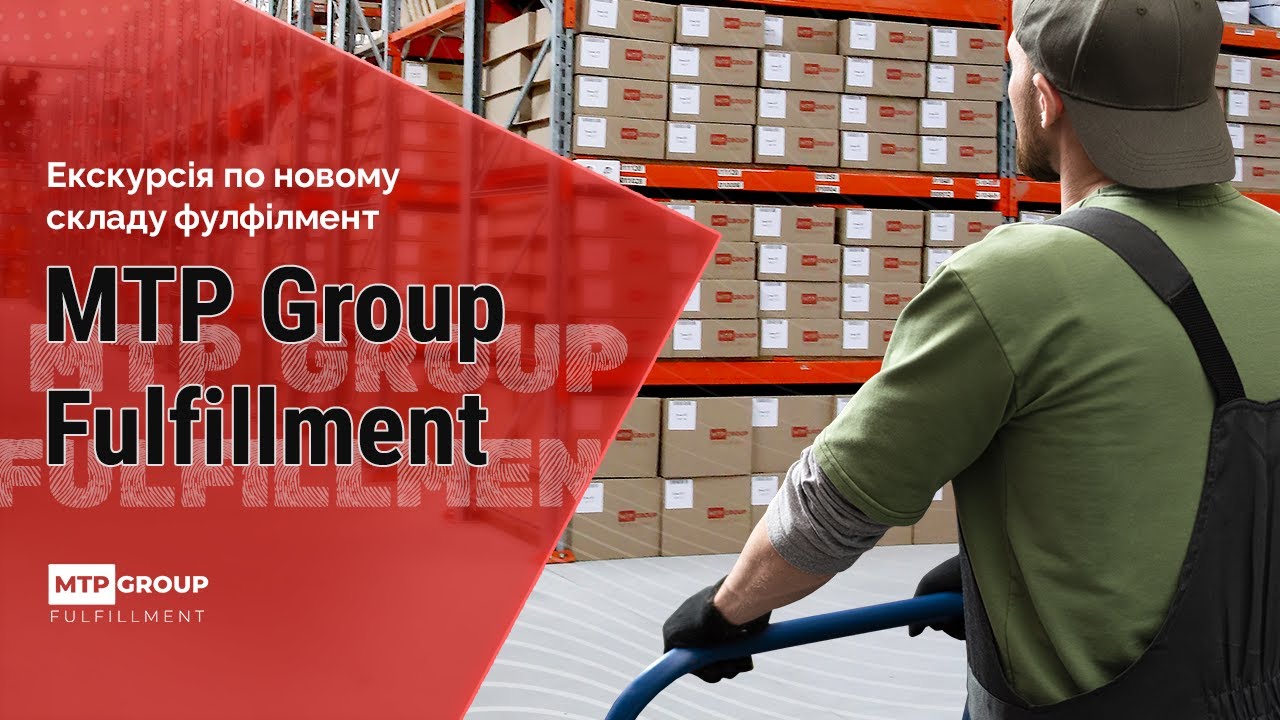
Video: how MTP Group warehouse works (1:27)
Chapter 2: When Is It Time to Outsource Logistics?
There is no magic threshold, but after working with hundreds of online businesses, I have identified several reliable signals that it is time to hand off logistics to a professional operator:
- You ship more than 30 orders per day and packing takes more than 3 hours of your time or requires a dedicated employee.
- You miss carrier pickups because order volume exceeds your packing capacity.
- Inventory tracking is unreliable.
- Returns are piling up and nobody has time to inspect, restock, or track returned items systematically.
- You want to expand to marketplaces like Rozetka or Prom.ua.
- You are spending more than 20 hours per week on logistics.
If two or more of these apply to your situation, outsourcing will almost certainly improve both your operational efficiency and your profitability.
Chapter 3: How to Choose the Right Fulfillment Operator
Not all fulfillment companies are created equal. Here are the criteria that matter most:
Track record and stability
Look for operators with at least 3-5 years of continuous operation.
Infrastructure and redundancy
Visit the warehouse. Look for organized storage zones, a functioning WMS with barcode scanning, adequate lighting, clean packing stations, and backup power.
Carrier relationships
The best fulfillment operators have preferred partner status with major carriers. A top-50 Nova Poshta ranking is a strong signal.
Technology and integrations
Verify that the operator integrates with your CRM and e-commerce platform. API-based integrations are preferable to manual CSV uploads.
Transparent pricing
Beware of operators who quote only the per-shipment fee while burying storage, receiving, and return-handling costs in the fine print.
Chapter 4: The Onboarding Process: What to Expect
Day 1: Consultation and contract
You describe your product range, average daily order volume, and any special handling requirements. The operator prepares a pricing proposal and contract.
Day 1-2: Inventory transfer
You ship your goods to the warehouse. Upon arrival, the team inspects items for damage, applies barcodes if needed, and enters everything into the WMS.
Day 1-2: Technical integration
The technical team connects your CRM or online store to the warehouse system via API. Integration typically takes 2-4 hours for supported platforms.
Day 2-3: Test shipments
The team processes several test orders to verify that packing quality, labeling, and carrier handoff meet your standards.
Day 3+: Live operations
Once test shipments are approved, the system goes live. Orders flow automatically.
Chapter 5: Scaling: From 100 to 6,000 Shipments Per Day
One of the greatest advantages of outsourcing to a 3PL is the ability to scale without proportional increases in your own team or overhead.
At MTP Group, we process up to 6,000 shipments per day across our two warehouses near Kyiv. That capacity was built over a decade of iterative improvements.
"The most rewarding part of my job is watching a client grow from 100 shipments a day to 2,000 without ever hiring a logistics manager. They spend 8 hours a month reviewing dashboards and approving invoices. Everything else happens automatically." — Mykola Liashchuk
Chapter 6: Common Mistakes and How to Avoid Them
Mistake 1: Choosing the cheapest operator
Price matters, but the cheapest provider often cuts corners on infrastructure, staff training, or technology.
Mistake 2: Delaying the switch too long
Many entrepreneurs wait until logistics is completely broken before outsourcing. The best time to outsource is when you first feel the strain.
Mistake 3: Not defining packing standards clearly
Document your packing requirements in detail before onboarding and provide sample packs for the warehouse team to reference.
Mistake 4: Ignoring return logistics
Ensure your fulfillment partner has a documented returns process from day one.
Mistake 5: Not monitoring dashboards
Spend at least 2 hours per week reviewing your fulfillment dashboard: check inventory levels, monitor order accuracy, and flag any anomalies early.
Ready to outsource logistics?
Calculate your fulfillment savings or contact us for a free consultation.